Free in-home measure and quote - PGT, CGI and CWS impact lines compared on your actual openings, style by style
Sliding glass doors
Impact garage doorsPGTCGI
 Before
 After
After Before
 After
After Before
 After
AfterCasement Windows in West Palm Beach, FL | TruePane Windows & Doors
Casement windows are the side-hinged, crank-operated workhorses of Florida hurricane construction, and we install them daily across West Palm Beach, from El Cid to Ibis to the Northwood Hills. They crank outward on a hinge and seal against the frame with a full compression gasket, which means when the wind blows, the pressure actually pushes the sash tighter against the seal. That’s the opposite of what a sliding window does under load. If you want impact protection without sacrificing the look of a classic Florida home, this is the profile that delivers. Call TruePane Windows & Doors at (561) 264-1279 and we’ll spec the right casement for your openings.
Product Overview - Casement Windows
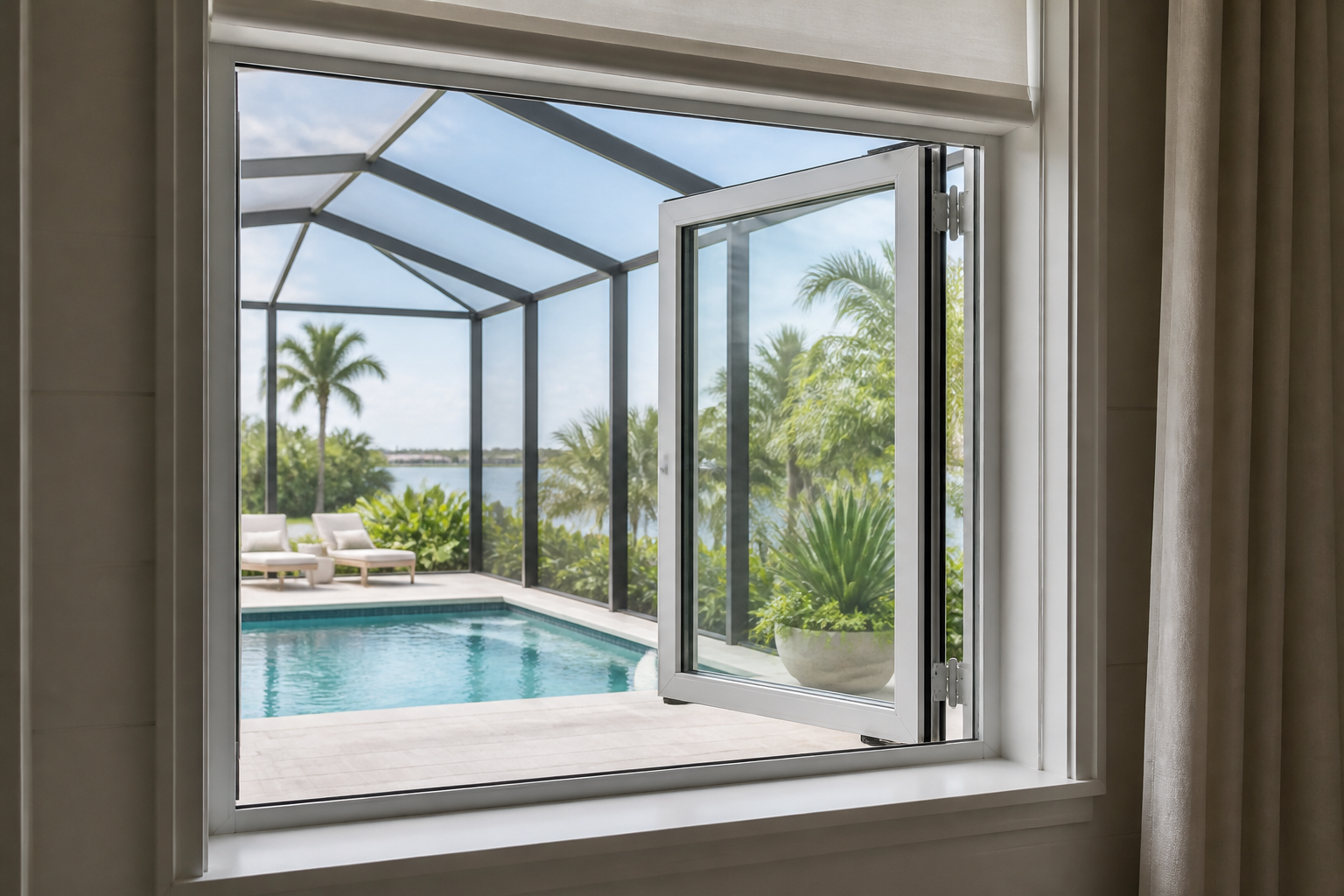
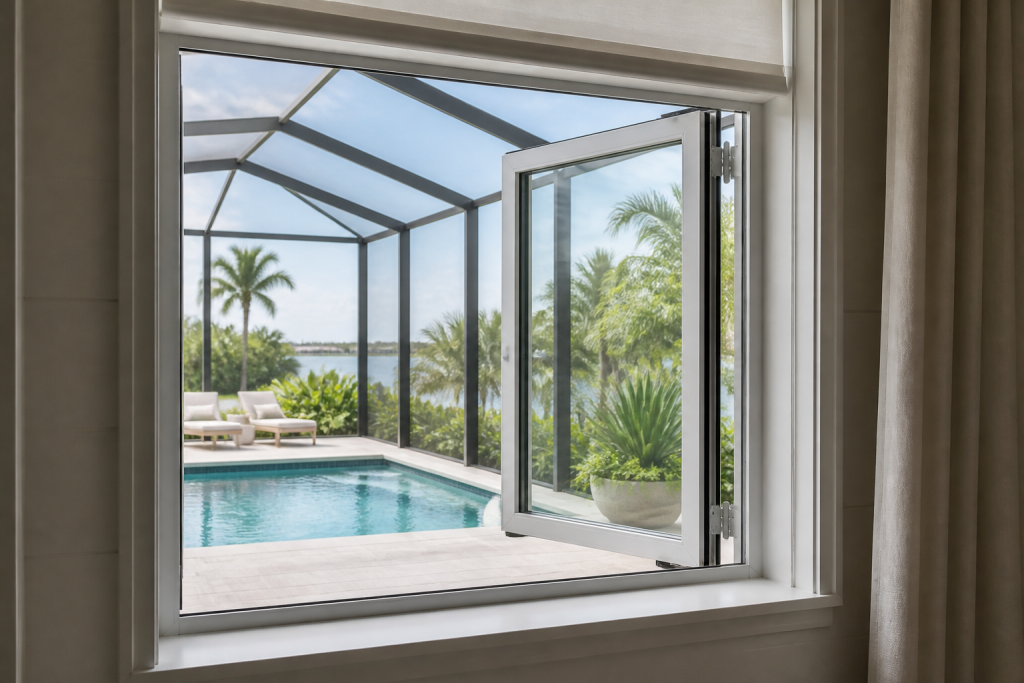
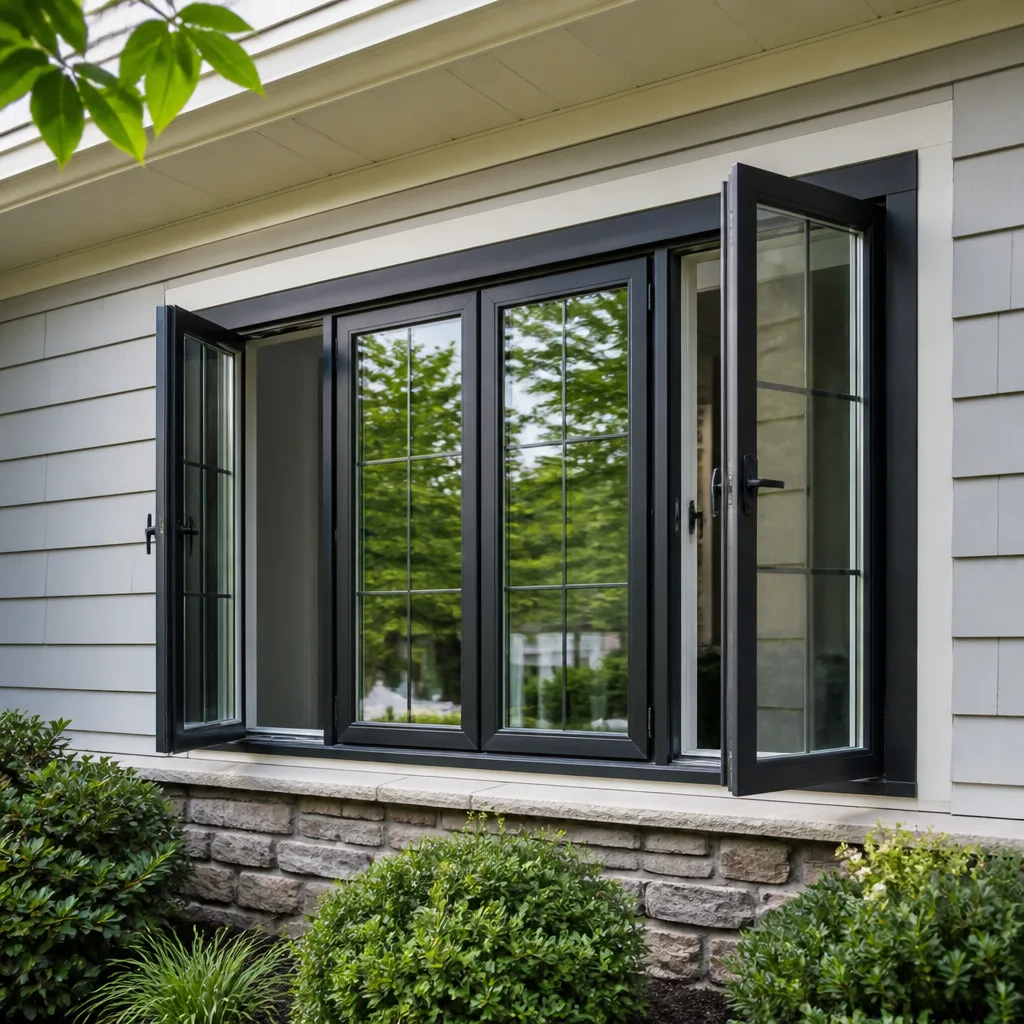
A casement window is exactly what it sounds like: a sash hinged at the side, operated by a fold-down crank handle. It swings outward, typically to a full 90 degrees, so the entire opening clears for ventilation. That’s a real advantage in West Palm Beach, where afternoon sea breezes off the Intracoastal can cool a room faster than any fan. The sash closes against a continuous compression seal that runs the full perimeter of the frame. When the crank is snugged down and the multi-point locking mechanism engages, that seal compresses and the window becomes effectively airtight. That’s the detail that matters for both energy performance and water intrusion during a storm.
Architecturally, casements fit where sliders don’t. They read as more traditional, which suits the Mediterranean Revival and Bermuda-style homes in neighborhoods like Flamingo Park and Prospect Park. They also work beautifully on second and third stories where a slider would feel heavy or out of proportion. We order these casements from the manufacturers we trust for Florida work: PGT, CGI, CWS, ES Windows, ECO, and Mr-Glass. Each line has its own frame tooling and hardware feel, but all of them are built around the same principle: laminated impact glass held in a frame that is anchored, sealed, and tested to take the hit and stay in place.
The frame materials we offer are aluminum and vinyl. Aluminum gives you a slimmer sightline and more glass area, which you’ll want if you’re replacing steel casements or want a modern look. Vinyl is the better insulator and handles salt air without pitting, which matters a lot within a few miles of the ocean. Both are extruded profiles designed to accept the heavy laminated glass packages these windows require. Hardware is stainless steel or corrosion-resistant coated, because a crank handle that seizes up after two summers near the beach is not something we’re willing to install.
Technical Specifications
Every casement we quote is configured to the exact opening dimensions, wind zone, and finish requirements of the home. Below are the core specification choices that go into each order. We walk through every one of these with you during the free estimate, because the right combination depends on where in West Palm Beach the home sits and which direction the openings face.
- Frame materials: Extruded aluminum or multi-chamber vinyl. Aluminum for narrow sightlines and larger spans; vinyl for maximum thermal resistance and coastal durability.
- Glass options: Laminated impact glass with a PVB interlayer, Low-E insulated glass, tinted glass, or clear glass. The impact lamination is the storm-rated core; Low-E and tint packages layer on energy performance.
- Finish options: White, almond, bronze, black, and tan. Both interior and exterior finishes can be selected, including dual-finish configurations where the outside color differs from the inside.
- Screen options: Fixed screen or retractable screen. Retractable screens disappear into the frame when the window is closed, preserving the clean look of the casement profile.
- Ventilation: Full 90-degree outward swing for unobstructed airflow across the entire opening.
Hurricane & Compliance Performance
The performance story for any impact casement in Florida comes down to one question: does it carry the documentation your building department will accept? Every casement we sell and install in West Palm Beach carries the paperwork required for a permitted HVHZ installation. Here is how each piece of the system contributes.
Laminated Impact Glass
The outer glass lite, a PVB (polyvinyl butyral) interlayer, and an inner glass lite are bonded under heat and pressure into a single pane. When a flying object strikes, the glass may crack, but it stays held in the frame by that interlayer. The window remains a sealed barrier. That’s the entire storm protection concept: not unbreakable glass, but glass that doesn’t leave the frame.
Miami-Dade NOA / Florida Product Approval
Each casement configuration we quote carries a Miami-Dade Notice of Acceptance or Florida Product Approval number. These numbers are issued per configuration: frame material, glass package, size, and design pressure all factor into which number applies. On any quote you get from us, the applicable NOA or FL approval number is listed so your permit submittal is clean the first time.
FBC / HVHZ Compliance
West Palm Beach sits inside the High-Velocity Hurricane Zone, which is the most demanding building code region in the state. These casement windows are engineered to Florida Building Code HVHZ requirements. That affects everything from the glass make-up to the hardware to the anchoring pattern. A window that isn’t HVHZ-engineered doesn’t belong on a home here.
TAS Testing Context
HVHZ-rated products are tested under a protocol family called TAS. TAS 201 is the large-missile impact test: a 9-pound 2×4 fired at the glass. TAS 202 is cyclic wind-pressure loading: thousands of pressure cycles that simulate hurricane gusts. TAS 203 is forced-entry resistance. A product that passes all three has proven it can take the hit, survive the cycling, and not be pushed open by the wind or an intruder after impact.
Design Pressure Matched to Your Wind Zone
Design pressure is the engineering metric that says how much wind load a window can handle before failure. We match design pressure to your actual wind zone, up to +/-100, and never higher than the engineered calculation requires. Overspecifying DP doesn’t make a window safer. It makes it heavy, expensive, and sometimes harder to operate. The correct DP is the one that matches your site.
Energy Performance
Impact casements are already the tightest-sealing window profile we install because of that full perimeter compression seal. If you add Low-E insulated glass, you’re layering a thermal break and a low-emissivity coating into the package. That combination is what makes a Florida room comfortable in August without the air conditioner running around the clock. Tinted glass is also available for direct western exposure where glare is the main complaint.
Color & Glass Options
The finish palette for these casements runs white, almond, bronze, black, and tan. In the older neighborhoods of West Palm Beach, like El Cid and the north end of Flagler Drive, almond and bronze read as period-correct against barrel tile roofs and stucco walls. White is the choice for the classic Florida cottage look, and it’s far and away the most common interior finish because it disappears against white trim. Black casements have become popular on modern rebuilds, especially on homes with a more contemporary, boxier architecture where the window itself is treated as a design element. Tan sits between almond and bronze, and it works well where the exterior has natural stone or a softer earth-tone stucco.
On the glass side, the decision tree is simple. If the opening is large and the room gets direct sun, Low-E insulated glass is the right call: it cuts heat gain without making the room dark. If the view matters more than anything and the opening faces north or east, clear laminated impact glass keeps the view true. Tinted glass is for glare control on west-facing openings and for coastal homes where raw sunlight bounces off the water. All of these are available in the same casement frame, so you can spec different glass packages for different elevations of the house. That’s normal on the homes we work on here.
Installation by TruePane Windows & Doors in West Palm Beach
Here’s the hard truth about impact windows: an NOA-rated casement installed poorly is not an NOA-rated window anymore. The rating depends on the frame being anchored correctly, the perimeter being sealed correctly, and the window being set level, plumb, and square. We’ve torn out impact windows in West Palm Beach that were installed with construction screws into rotten wood bucks and foam that had pulled away from the rough opening. The window was fine. The installation was worthless.
Our process starts before the quote is even written. We inspect the existing opening, identify the structural condition of the buck or concrete, and measure for square. If there’s water damage or rot, we flag it before we price the job, not after the old window comes out. When we set the new casement, the frame is shimmed and checked level, plumb, and square at every stage. We use AAMA 812 low-expansion foam around the perimeter, which seals the gap without distorting the frame. The installation practice follows AAMA 2400 and 2410 standards, which cover the details most installers shortcut: sill pan flashing, head flashing, and the integration of the window into the wall’s drainage plane.
West Palm Beach adds its own layer of considerations. Homes within a few blocks of the Intracoastal or the ocean face salt spray, which means we pay attention to the fasteners and any exposed metal. The permitting office requires the NOA or Florida Product Approval numbers on the permit application, and we provide those in a format the plan reviewer recognizes. After the window is set and sealed, we run water on the exterior to verify there’s no infiltration at the sill or jambs. The final check is operational: the crank, the seal compression, the locking points. If the sash doesn’t close with even seal pressure all the way around, it gets adjusted before we consider the window done.
Frequently Asked Questions - Casement Windows
The design pressure is matched to your specific wind zone in West Palm Beach, up to +/-100. We calculate the required DP for your exact location and opening size during the estimate, and that’s the number we reference in your quote and permit documentation. Call (561) 264-1279 for a site-specific evaluation.
Lead times vary by manufacturer and the glass package you select. Standard laminated impact casements from PGT or CGI typically run shorter than custom configurations with tinted or Low-E insulated glass. When we quote your project, we give you a written lead time and we stick to it as closely as the manufacturer allows. Call (561) 264-1279 and we’ll check current lead times for your configuration.
Yes. The City of West Palm Beach Building Division requires the applicable NOA or Florida Product Approval number as part of the permit packet for impact window replacement. We provide the correct number for your specific configuration and we can handle the permit submittal as part of your project.
Within the frame’s structural limits, yes. Casements can be built as singles, pairs with a mullion, or combinations with fixed picture windows or transoms above. The opening width and height are capped by what the frame and hardware can carry at your wind zone. We design around that during the free on-site measurement, not after you’ve already fallen in love with a size that won’t pass engineering.
Keep the track and hinges clean, lubricate the crank mechanism with a dry silicone spray once or twice a year, and check the perimeter seal for compression by closing the sash and running your hand around the inside edge. If you feel airflow anywhere, the sash needs a compression adjustment. Near salt water, rinse the exterior frame and hardware with fresh water when you rinse your car. That’s the single most effective maintenance move in coastal West Palm Beach.
Get a Quote - Casement Windows in West Palm Beach
If you’re replacing windows on a home in West Palm Beach, the right move is to get the openings measured and the wind zone confirmed before you compare product lines. We offer free on-site measurements and a written line-item quote with the exact casement configuration, glass package, finish, and NOA numbers listed. Call TruePane Windows & Doors at (561) 264-1279 and let’s get your project started.
Written by the team at TruePane Windows & Doors, serving West Palm Beach, FL with hurricane-impact window and door installation for over 15 years.
Six Reasons Homeowners Choose TruePane Windows & Doors
Impact systems engineered to design pressures up to +/-100, matched to your wind zone - your openings hold when the storm arrives.
Low-E insulated impact glass from our manufacturer lines commonly cuts monthly cooling bills 20-30%.
Laminated impact glass shuts out up to 40% of outside noise - traffic, neighbors, weather.
Monitoring services run $30-90 a month. Laminated impact glass resists forced entry around the clock, with no subscription.
Florida homeowners average around 25% savings on the windstorm portion of their policy after protecting every opening - some homes qualify for more.
A full impact package upgrades curb appeal, buyer confidence and appraised value in one project.
Other TruePane Windows & Doors Services
What Neighbors Say About TruePane Windows & Doors
Detailed Images