
Last updated August 25, 2026
Free in-home measure and quote - PGT, CGI and CWS impact lines compared on your actual openings, style by style
Sliding glass doors
Impact garage doorsPGTCGI
 Before
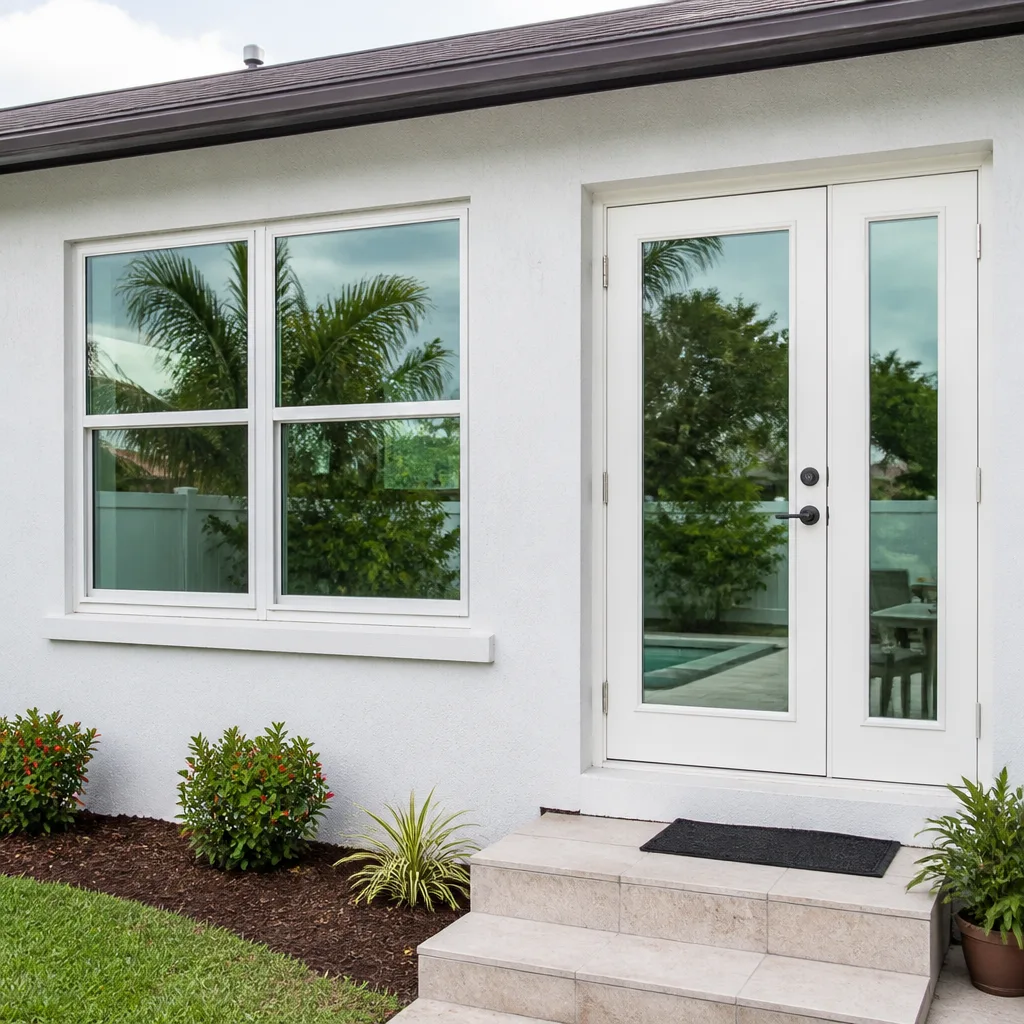 After
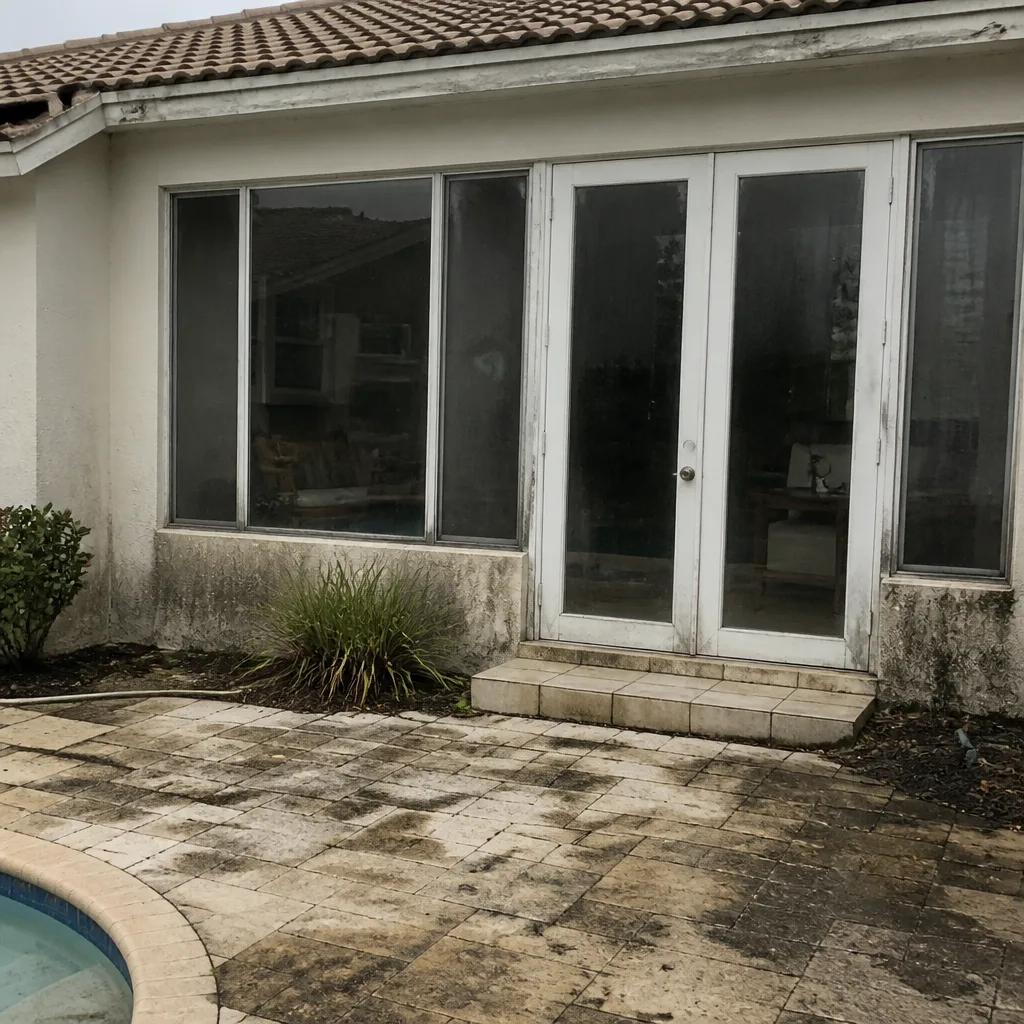 Before
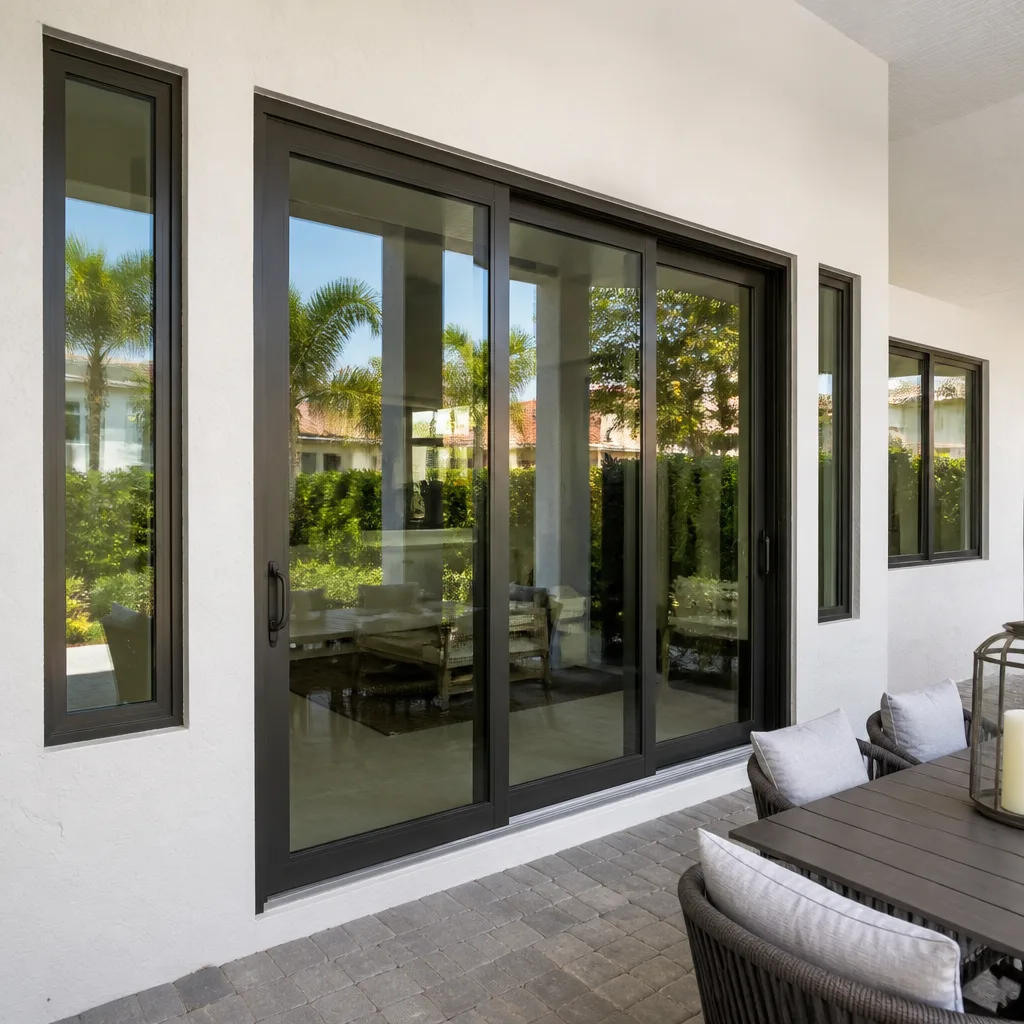 After
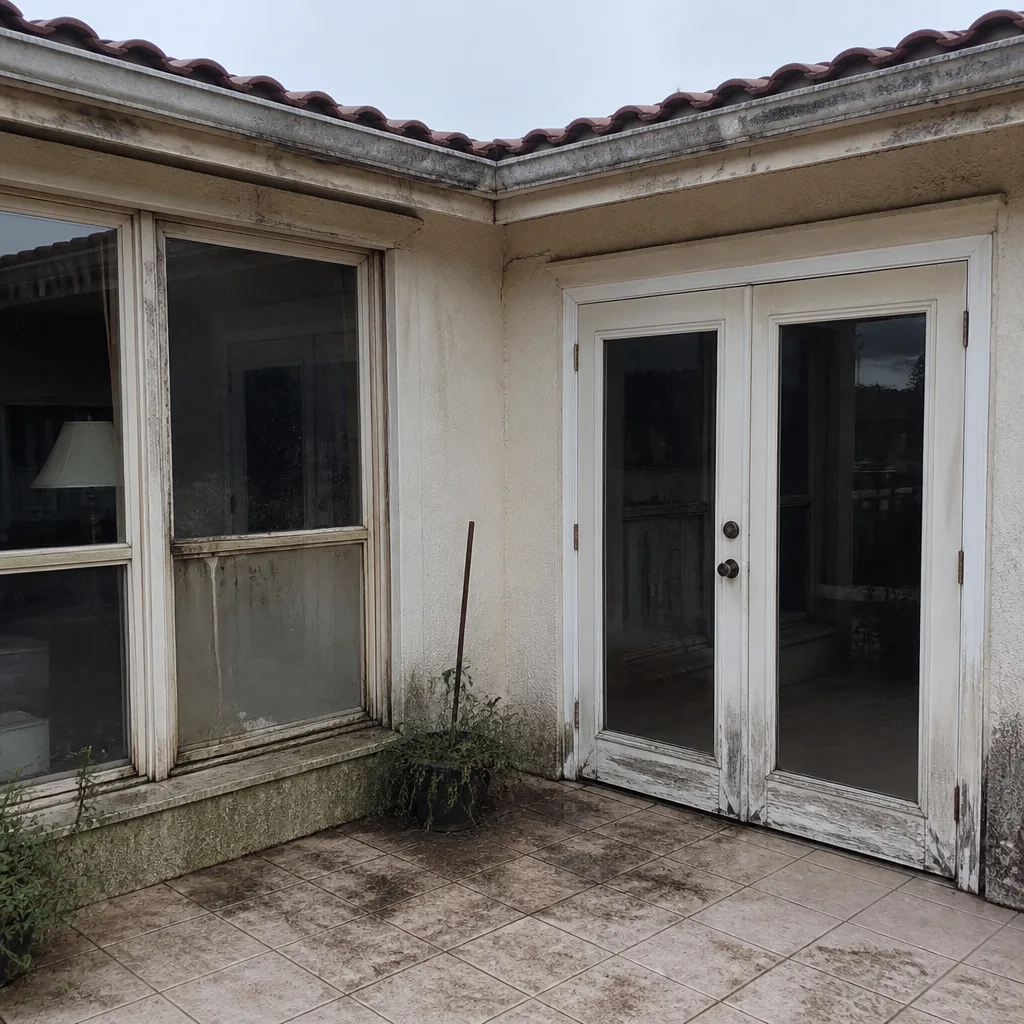 Before
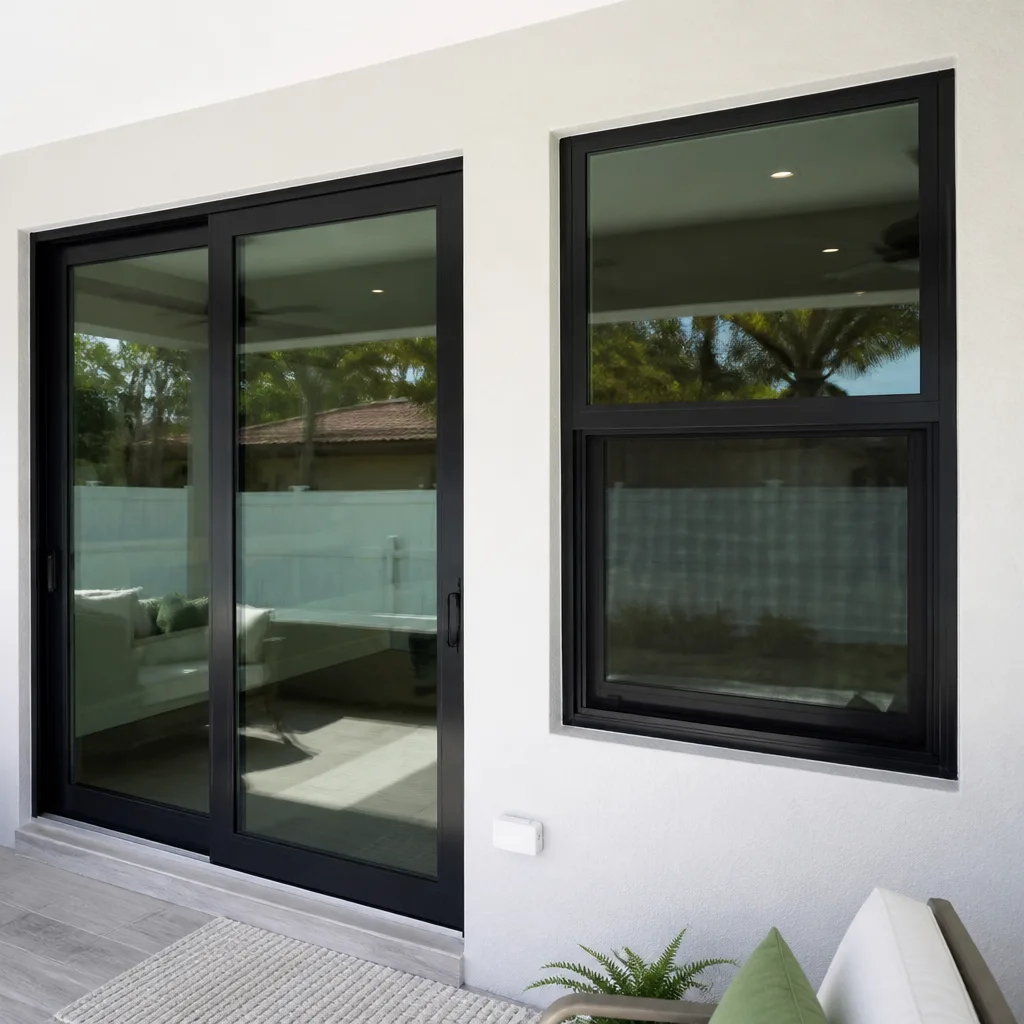 After
Windows & Doors Warning Signs: A West Palm Beach Homeowner’s Reference Guide
Most homeowners don’t realize that a window or door will tell you it’s failing long before it falls out of the frame. The signs are quiet: a sash that sticks in August, a faint whistle during an afternoon thunderstorm, a water stain that appears and then dries before you think to investigate. In West Palm Beach, where salt air, humidity, and hurricane season work on every opening in your house year-round, these warnings arrive earlier and cost more when ignored. This guide walks you through what to watch for, what each sign actually means, and when it’s time to make the call.
Quick Answer
The most common warning signs of failing windows and doors in West Palm Beach are condensation or fogging between glass panes, difficulty opening or closing, visible daylight around frames, rising energy bills, water stains or soft drywall near openings, and drafts you can feel with the back of your hand. Any one of these is worth investigating; two or more usually means replacement is cheaper than repeated repair.
Table of Contents
- Fogging and Condensation Between the Panes
- Windows and Doors That Stick, Drag, or Won’t Latch
- Daylight, Drafts, and the Back-of-the-Hand Test
- Water Stains, Soft Drywall, and Hidden Rot
- Energy Bills That Climb Without Explanation
- Impact Glass and Hurricane Code: What West Palm Beach Homes Actually Need
- Age Milestones: When Windows and Doors Have Served Their Time
- Common Mistakes to Avoid
- When to Call a Professional
- Frequently Asked Questions
Fogging and Condensation Between the Panes
A window that fogs between the two sheets of glass has a dead seal. There’s no fixing it from the outside, no defogging trick that lasts, and no amount of wiping that helps, because the moisture is trapped inside the insulated glass unit itself. In West Palm Beach, we see this constantly in homes built in the 1990s and early 2000s, when double-pane windows were installed in large numbers and the original seals have now failed due to years of heat cycling and UV exposure.
Here’s what’s actually happening: every insulated glass unit contains a sealed airspace, often filled with argon gas, between the panes. When the perimeter seal fails, outside air and humidity enter that space. The argon escapes. The window loses most of its insulating value and becomes a liability in a storm. The fog is unsightly, but the real problem is that the window no longer performs.
What to watch for:
- Persistent haze or droplets between the glass that won’t wipe clean from either side
- A milky or streaked appearance that worsens in the morning or after rain
- Visible water beading inside the glass unit on humid days
- Windows that are permanently fogged in one corner, indicating a seal breach at that point
The fix: The insulated glass unit gets replaced, or the entire sash gets replaced depending on the window’s age and condition. It’s a job TruePane Windows & Doors home does regularly across West Palm Beach, from Flamingo Park to El Cid to the neighborhoods along Southern Boulevard. We replace just the glass unit when the frame and hardware are still in good shape, and the full window when they are not. On homes with impact-rated frames, replacing the glass unit preserves the original structural opening while restoring thermal and storm performance.
Windows and Doors That Stick, Drag, or Won’t Latch
A window that sticks in one season but not another is telling you the frame or the house itself is moving. In West Palm Beach, our soil is sandy and our humidity swings are extreme. Wood frames swell in the summer and shrink in the winter dry spells. Aluminum frames expand in direct sun. Concrete block homes settle slowly over decades. When a window or door binds, drags, or requires two hands to operate, it’s rarely just a hardware issue.
We’ve seen this in older neighborhoods like Grandview Heights and Sunshine Park, where houses built in the 1950s and 1960s have settled into positions their original windows now fight against. The window is square; the opening no longer is. Forcing it open and closed wears down tracks, strips screw holes, and eventually springs the frame corners.
Check these warning signs:
- You have to lift or shove the sash to get it moving
- The door rubs against the jamb at the top on the latch side, leaving a mark
- The deadbolt won’t slide home without you pulling the door hard toward you
- Windows that used to stay open now creep down or slam shut
- Lock points don’t line up, so the lock only engages partway or not at all
These are not cosmetic problems. A door that won’t latch is a security issue. A window that won’t close fully is a water and air intrusion risk. A window that slams shut is a finger injury waiting to happen. If the frame itself has racked out of square, no amount of hardware adjustment will fix it permanently. The opening needs to be re-trued or the window or door needs to be replaced with one that fits the actual rough opening, not the one that fit when the house was built.
Daylight, Drafts, and the Back-of-the-Hand Test
The cheapest diagnostic tool in your house is the back of your hand. On a windless day, run it slowly around the perimeter of every window and door. If you feel air moving, the weatherstripping has failed or the frame is not sealing. If you can see daylight around a closed door, the gap is bigger than any weatherstrip can bridge.
In West Palm Beach, air leakage is not just an energy problem. Our afternoon thunderstorms arrive with driving rain, and the wind pushes water sideways into any gap. An eighth-inch daylight crack at the bottom of a patio door is a direct path for wind-driven rain during a summer storm. Over time, that water soaks into the subfloor, the drywall, and the framing.
Where to check first:
- The bottom sweep on exterior doors, especially sliding glass doors and French doors
- The meeting rail where double-hung window sashes overlap in the middle
- The corners of the frame, where weatherstripping miter joints separate
- Around any door or window installed as a retrofit, especially if the exterior sealant bead has cracked or pulled away
- The top of tall sliders and patio doors, which are often ignored because they are above eye level
A draft you can feel in July, when the air conditioner is running, is warm humid air entering and cooled air escaping. The same gap lets humid air in during the summer and conditioned air out all year. Replacing worn weatherstripping is a short-term fix. When the frame itself is bowed or the rough opening has shifted, true correction means resetting the window or door.
Water Stains, Soft Drywall, and Hidden Rot
Water is patient and it is quiet, and in West Palm Beach it never really stops. A water stain on the ceiling below a second-story window, discoloration on the drywall beside a door, or baseboards that feel soft when you press on them all point to the same thing: water is getting in and gravity is carrying it somewhere you can see.
By the time you see the stain, the leak has usually been active for months. The water travels behind the wall, along headers and studs, and pools where it finds a path. In wood framing, this means rot. In concrete block homes, it means corrosion of steel lintels and anchors. We’ve opened walls in West Palm Beach houses where the window looked fine from the inside, but the exterior frame seal had failed years earlier and the wall cavity was carrying water down into the slab.
Signs that deserve a closer look:
- Drywall that feels soft, spongy, or crumbles when you press it near a window or door corner
- Paint that bubbles or peels in a vertical line below a window
- Baseboards that have swelled, warped, or pulled away from the wall
- A musty smell that returns even after cleaning
- Caulk around the exterior frame that has shrunk, cracked, or separated from the stucco or siding
The fix depends on where the water is entering. Exterior sealant failure is common and repairable. Failed flashing above a window or door is more serious. A frame that has rotted at the sill requires replacement, not patching. If you are not sure where the water is coming from, it’s worth having a professional pull the casing and look before the damage grows.
Energy Bills That Climb Without Explanation
Florida Power & Light bills rise with the seasons, but a steady climb that doesn’t match the weather pattern is different. If your cooling bill in June is higher than it was last June, and the thermostat setting has not changed, the house is working harder than it used to. Windows and doors are often a big part of why.
West Palm Beach homes built before the 2000s often have single-pane windows or early double-pane units with failed seals. A single-pane window transfers heat roughly ten times faster than an insulated wall. A wall of west-facing windows in the afternoon sun can add thousands of BTUs of heat load to a room. If the windows are old, or if the seals have failed on newer ones, your air conditioner is fighting that heat every day from May through October.
What to look for:
- Rooms on one side of the house are consistently warmer than others, even with vents open
- The air conditioner runs longer cycles than it used to, without a change in the thermostat
- Windows facing west feel warm to the touch from the inside on sunny afternoons
- Your bill history shows a steady upward trend over two or three years
- The house feels humid even with the AC running, which points to air infiltration
Replacing old or failed windows in a West Palm Beach house is not a cosmetic upgrade. It directly reduces the heat gain the air conditioner has to fight. The return on investment shows up monthly on the FPL bill, and it shows up in comfort, in reduced humidity, and in how long the AC equipment lasts before needing replacement.
Impact Glass and Hurricane Code: What West Palm Beach Homes Actually Need
If you live anywhere in West Palm Beach, you are in a high-velocity hurricane zone. The building code requires that every exterior opening either be impact-rated or be protected by an approved shutter system. The code does not care how old the house is. A 1960s ranch in Vedado and a 2015 townhouse in CityPlace are held to the same standard on this point.
Many older homes in West Palm Beach have original windows protected by old aluminum shutters or none at all. When a storm comes, plywood goes up or nothing goes up. Here’s what most people don’t realize: impact-rated glass does more than survive a storm. It works every single day. It blocks UV rays that fade floors and furniture. It cuts outside noise dramatically. It resists forced entry far better than standard glass. And it is always there, ready, without anyone having to climb a ladder when a hurricane is three days out.
The three things to check on your windows and doors:
- Is the glass impact-rated? Look for a permanent etched mark in one corner of the glass. It will list the manufacturer, the standard it meets, and a product number.
- Is the frame impact-rated? The glass and the frame are tested together as a unit. Impact glass in a non-impact frame does not meet code.
- Are the certification labels available? Without the label and the product documentation, an inspector will not pass the installation.
We install impact windows and doors from manufacturers including CGI, CWS, and ES Windows, and we provide side-by-side written quotes so you can compare them on paper. When the job is done, both warranty layers are registered in writing before the technician leaves the driveway. That’s the standard we work to, and it is not negotiable.
Age Milestones: When Windows and Doors Have Served Their Time
Windows and doors are not forever. They are mechanical assemblies with seals, gaskets, rollers, balances, and frames that fatigue. Here in West Palm Beach, the climate shortens their useful life compared to houses in drier, cooler parts of the country. A window that would last forty years in Connecticut might be done at twenty-five here, because the heat, humidity, and salt air never stop working on it.
A practical timeline based on what we see in the field:
- 0 to 10 years: Little should fail. If it does, it’s usually a manufacturing defect or an installation error. Warranties apply.
- 10 to 20 years: Weatherstripping and hardware wear. Rollers on sliding doors get gritty. Balances on double-hungs weaken. Repairs are cost-effective.
- 20 to 30 years: Seals begin failing on insulated glass units. Aluminum frames show corrosion. Wood frames show rot at sills. Replacement starts making more sense than repair.
- 30+ years: The window has outlived its design life. The glass is often single-pane or early double-pane. The frame is no longer square. Replacement is usually the financially sound decision.
This timeline assumes normal conditions. A house directly on the Intracoastal or within a few blocks of the ocean ages its windows faster, because the salt air attacks aluminum and hardware. A house built with proper overhangs and protected windows ages slower. The age of your windows is a starting point, not a verdict. The condition of the window is what actually decides whether it gets repaired or replaced.
Common Mistakes to Avoid
- Waiting until a storm is forecast to check impact compliance. By the time the storm track appears, every contractor in Palm Beach County is booked for weeks. Check your windows and doors now, in the off-season, when you have time to make a measured decision.
- Caulking over rotted wood. Caulk seals a joint, it does not restore strength. If the wood is soft underneath, the water and rot continue spreading. The rotted section has to come out and be replaced.
- Replacing only the fogged glass in an old warped frame. If the frame has racked out of square, a new glass unit goes in under stress and fails again. The opening itself needs correction first.
- Judging impact windows by the thickness of the glass alone. Impact performance is about the interlayer, the frame, and how they were tested as a system. Thicker is not automatically stronger.
- Keeping the original single-pane windows for the “character” of the house. We respect old houses, but a 1950s jalousie window in West Palm Beach is an energy sieve, a security gap, and a code liability. There are impact-rated replacements that preserve the look far better than people expect.
- Getting one quote and assuming it’s the market price. Prices in West Palm Beach vary by product line, frame material, code requirements, and the condition of the opening. Get at least two written quotes, side by side, that specify the exact product and warranty terms, not just a bottom-line number.
When to Call a Professional
Some things are worth doing yourself: cleaning the tracks, checking weatherstripping, observing where water appears during a storm. But when the frame is out of square, the glass seal has failed, or the opening does not meet code, the job stops being a weekend project. Impact-rated windows and doors are tested systems, and they only work as rated when installed correctly. A bad install voids the warranty and leaves the house vulnerable in exactly the way the product was designed to prevent.
We have re-done enough botched installs in West Palm Beach to know the difference. The manufacturer honors the warranty when the install is right. The house stays dry when the flashing is done properly. The window stays square when the rough opening is corrected before the new unit goes in. TruePane Windows & Doors offers free estimates in West Palm Beach, call (561) 264-1279 and we’ll come look at your windows and doors and give you a written quote with real numbers on paper.
Frequently Asked Questions
Window replacement in West Palm Beach typically runs from about $600 to $1,500 per opening for standard double-pane windows, and from $1,200 to $3,000 per opening for impact-rated windows, depending on size, frame material, and the condition of the existing opening. The final number depends heavily on the product spec and how much work the rough opening needs before the new window goes in.
No, the Florida Building Code accepts either impact-rated windows or code-approved shutters, but the two are not equivalent in daily use. Shutters only work when someone puts them up, and they do nothing the other 350 days of the year. Impact windows are always there, always working, and they carry insurance premium benefits that shutters do not in many cases.
A fogged window can usually be repaired by replacing the insulated glass unit rather than the entire window, as long as the frame, sashes, and hardware are in good condition. If the frame is also failing, full window replacement is the more durable choice. We evaluate the whole window before recommending either path.
In South Florida’s heat, humidity, and salt air, most windows have a useful service life of 20 to 30 years before seal failures, frame corrosion, or hardware fatigue make replacement the better financial decision. Coastal homes age faster, and well-shaded homes age slower.
An impact window uses a laminated glass interlayer, similar to a car windshield, combined with a reinforced frame and specialized anchoring so the entire assembly resists wind pressure and flying debris as a tested system. The glass may crack under impact, but the interlayer holds it together and keeps the building envelope sealed.
Yes, any window, door, or sliding glass door replacement in West Palm Beach requires a permit, and impact-rated openings must pass a specific inspection to confirm the product, the anchoring, and the installation all meet Miami-Dade or Florida Building Code standards. A licensed contractor handles the permit and the inspection as part of the job.
The Bottom Line
Your windows and doors are not decoration. They are the building envelope, the storm barrier, the energy boundary, and the security perimeter, all at once. In West Palm Beach, they carry more load than windows do almost anywhere else in the country, and they give clear signs when they are failing. Fogged glass, stuck sashes, daylight at the edges, water stains, and rising cooling bills are all cues to act before the damage compounds. If any of these warnings sound familiar, you owe it to yourself to have a professional look before the next storm season arrives. For a free, no-obligation estimate, call TruePane Windows & Doors at (561) 264-1279. A live person answers, day or night, and we’ll give you straight answers in plain language, in writing.
Written by the team at TruePane Windows & Doors.
Six Reasons Homeowners Choose TruePane Windows & Doors
Impact systems engineered to design pressures up to +/-100, matched to your wind zone - your openings hold when the storm arrives.
Low-E insulated impact glass from our manufacturer lines commonly cuts monthly cooling bills 20-30%.
Laminated impact glass shuts out up to 40% of outside noise - traffic, neighbors, weather.
Monitoring services run $30-90 a month. Laminated impact glass resists forced entry around the clock, with no subscription.
Florida homeowners average around 25% savings on the windstorm portion of their policy after protecting every opening - some homes qualify for more.
A full impact package upgrades curb appeal, buyer confidence and appraised value in one project.